
Embracing rustic tiny house design means crafting a sanctuary that radiates warmth and comfort, offering a peaceful escape from everyday life.
This style harmonizes practicality with rustic allure, utilizing organic materials and smart design techniques to optimize every inch of limited space.
Whether your goal is to downsize or you simply adore the charm of a snug, cabin-inspired dwelling, rustic tiny house interiors provide a distinctive fusion of coziness and aesthetic appeal.
Let’s explore how to reimagine even the most compact areas into inviting retreats that feel both expansive and intimate.
Essential Components of Rustic Tiny House Interiors
Embracing Organic Materials
At the core of rustic design is the use of natural elements. In tiny homes, these materials not only infuse personality but also foster a seamless flow that visually enlarges the space.
Wood remains the cornerstone of rustic aesthetics. Particularly, reclaimed wood adds a narrative of history and warmth, perfect for flooring, wall paneling, and ceiling treatments.
While darker woods evoke a snug ambiance, they can sometimes shrink the perception of space in smaller rooms. Combining lighter and darker wood tones can create a balanced and inviting environment.

Stone accents, such as a feature wall or fireplace surround, introduce texture and a grounded, earthy feel, serving as a captivating centerpiece in your living space.
Incorporating metal details-like wrought iron light fixtures or copper plumbing-adds a rugged sophistication, ideal for hardware, faucets, and lighting elements.
Earthy and Soothing Color Schemes
Rustic tiny homes typically favor a palette inspired by nature-think rich browns, deep greens, and soft neutrals. These hues foster a tranquil atmosphere that connects the interior to the outdoors.
To counterbalance darker wood tones, integrating lighter shades on walls and furnishings can maintain an open, airy feel essential for compact living.

Maximizing Functionality in Compact Spaces
Living Room Strategies
In tiny homes, the living area often doubles as a kitchen and dining zone, demanding multifunctional design solutions.
Adopting an open-plan layout enhances spatial flow and maximizes usable square footage.
Opt for versatile furniture, such as a sofa bed for accommodating guests or a dining table that can also serve as a workspace.

Compact Kitchen Design
Though small, your kitchen can pack a punch with thoughtful design.
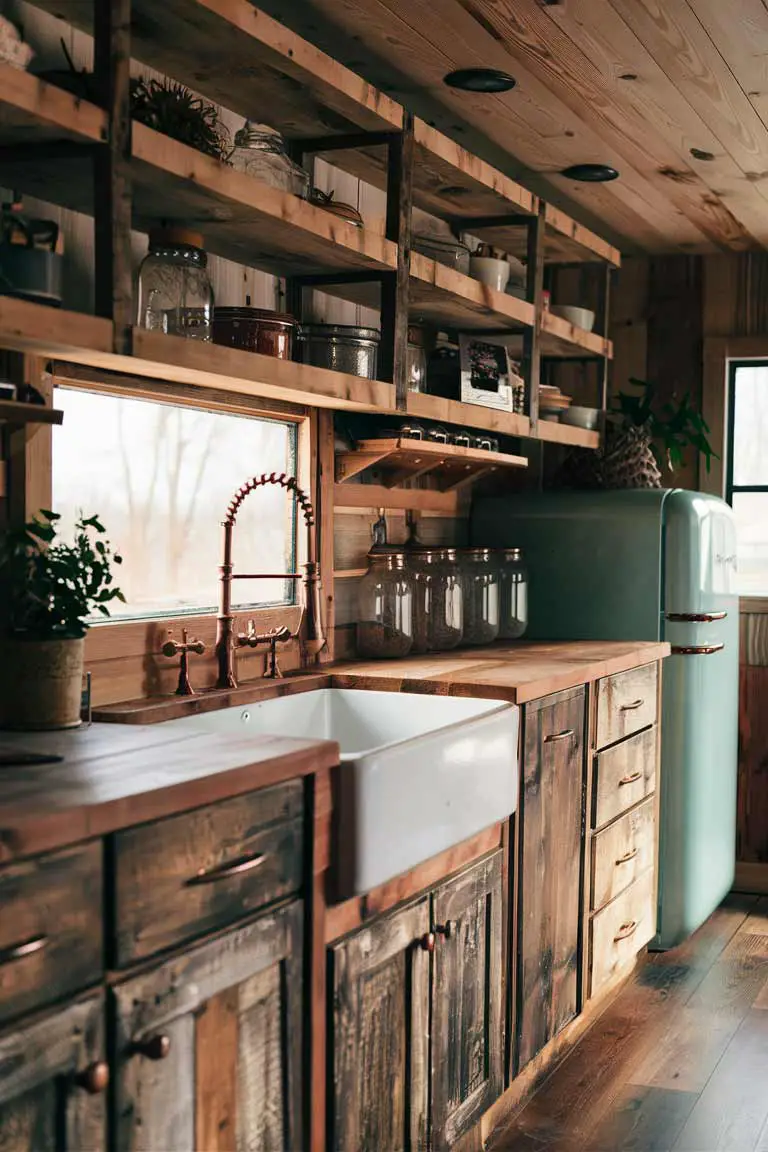
Open shelving crafted from reclaimed wood keeps the space feeling light and accessible.
A farmhouse sink paired with a copper faucet enhances rustic charm, while distressed cabinetry adds character.
Maximize storage by utilizing mason jars and other creative containers, which also double as decorative elements.
For a nostalgic vibe, consider integrating retro-style appliances.
Inviting Dining Corners
Even in limited space, a quaint dining nook is achievable.
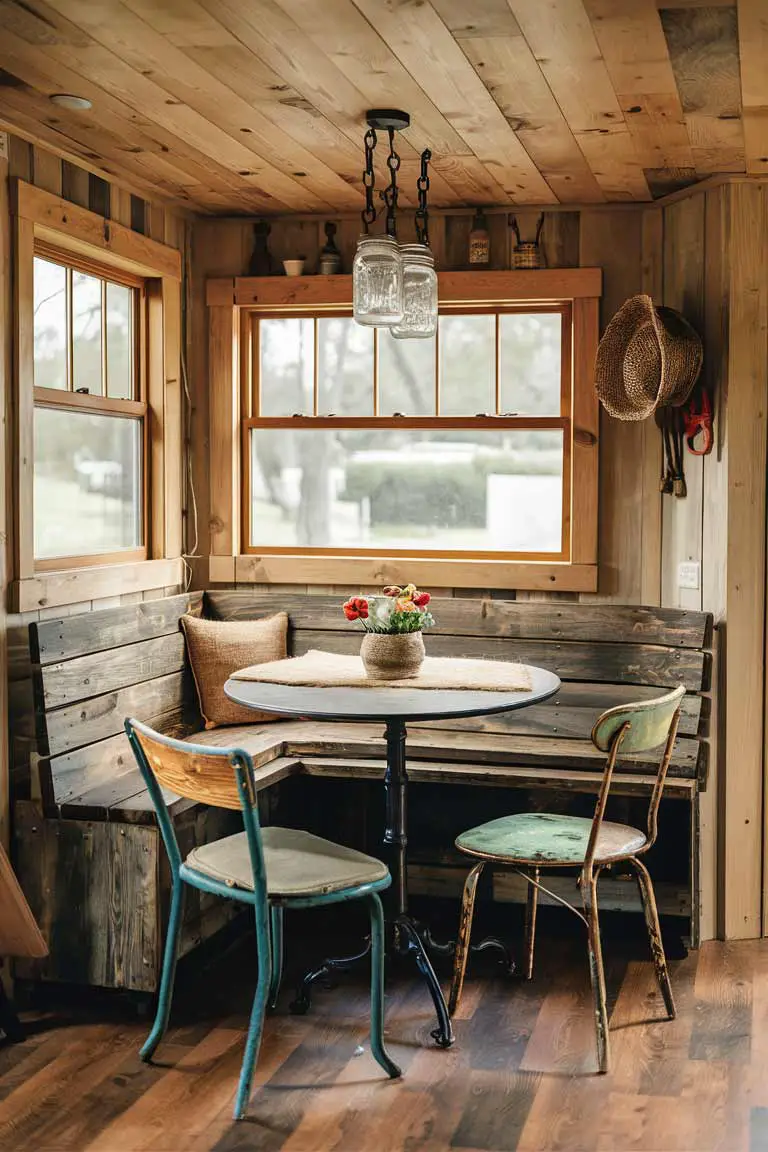
Build a bench from reclaimed wood and pair it with a small rustic table and mismatched vintage chairs for an eclectic flair.
Accents like burlap runners or a mason jar chandelier overhead add personality and charm.
Lofted Bedroom Spaces
Loft bedrooms are a smart way to utilize vertical space, freeing up the main floor.
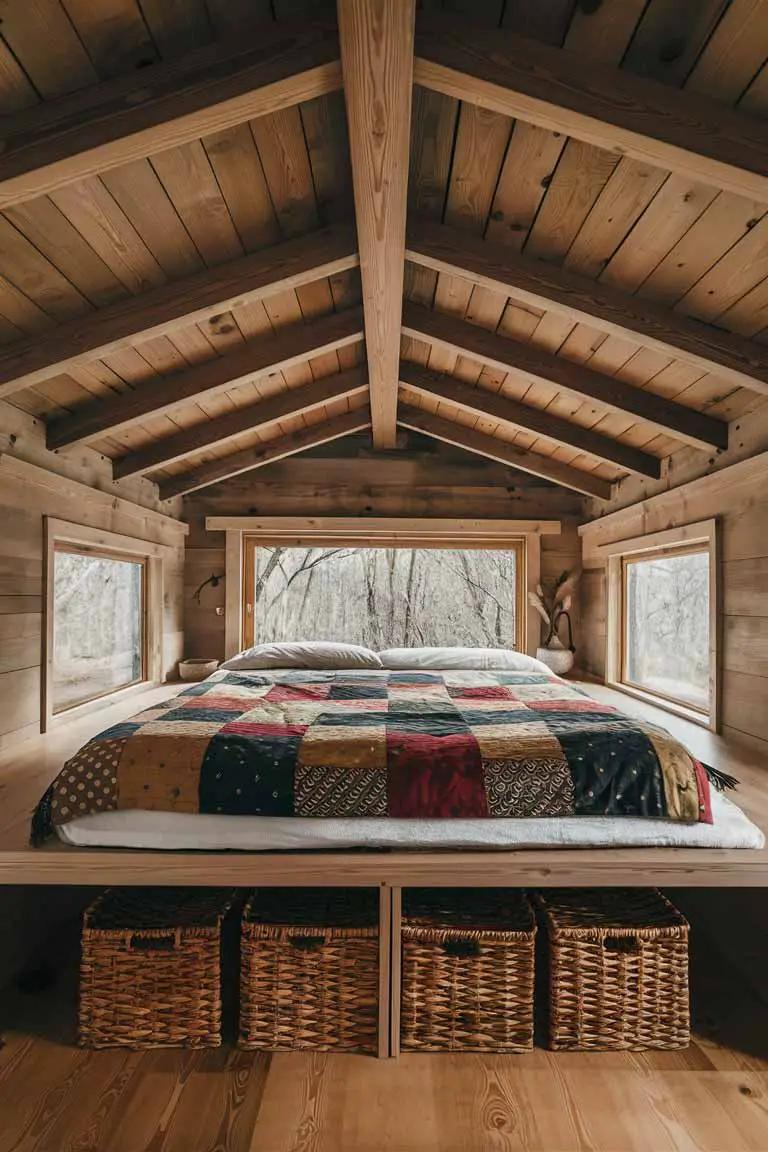
Choose a low-profile bed dressed with a patchwork quilt to evoke rustic coziness.
Exposed wooden beams and ceilings add warmth, while woven baskets provide practical storage.
Positioning the bed near a large window offers serene views and natural light, enhancing the rustic retreat feel.
Rustic Bathroom Retreats
Small bathrooms can still embody rustic elegance.
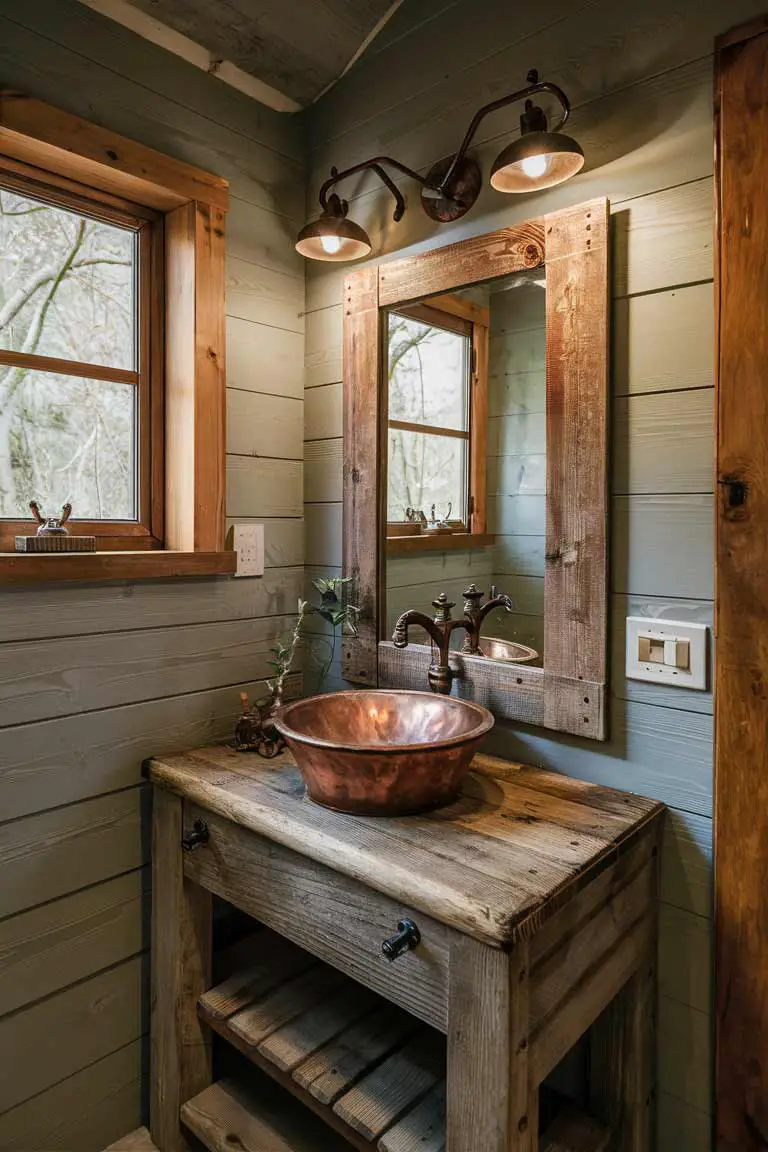
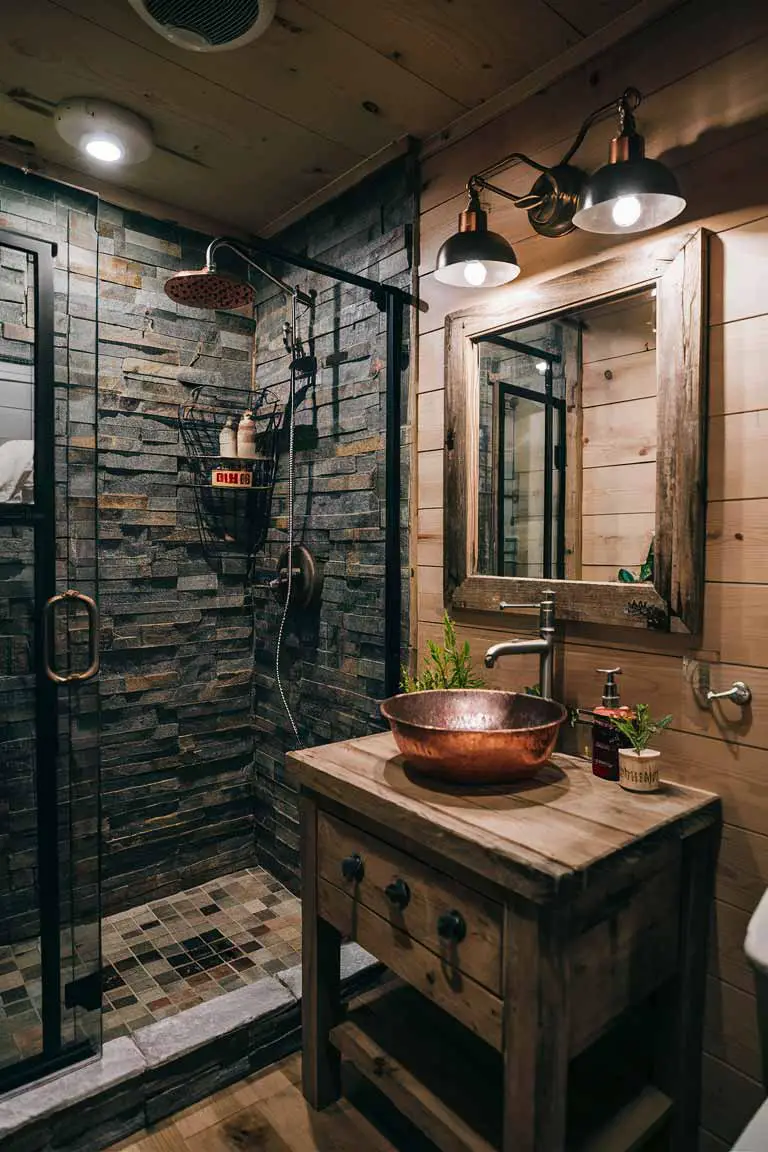
Stone-tiled showers bring natural textures indoors, complemented by wooden vanities topped with copper basin sinks.
Mirrors framed with repurposed barn wood enhance authenticity, while industrial-style lighting fixtures complete the look.
Compact Home Office Solutions
With remote work becoming increasingly common, carving out a workspace is essential.
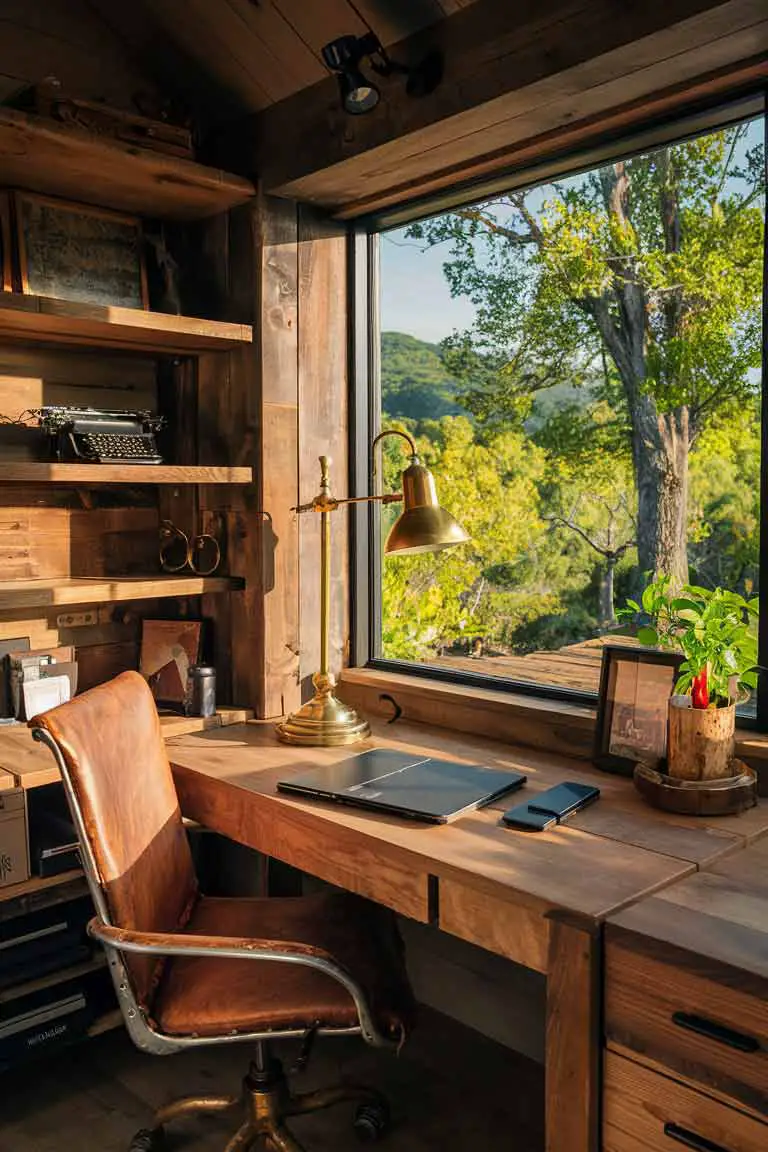
A wooden desk paired with a comfortable leather chair creates a functional nook.
Reclaimed wood shelves offer storage and display space, while vintage items like a typewriter add character.
Good lighting is vital; a brass desk lamp provides warmth and focus.
Whenever possible, situate your office near a window to benefit from natural light and inspiring views.
Innovative Storage and Space Optimization
Custom Built-in Furnishings
In tiny living, every inch is precious. Built-in furniture maximizes space efficiency.
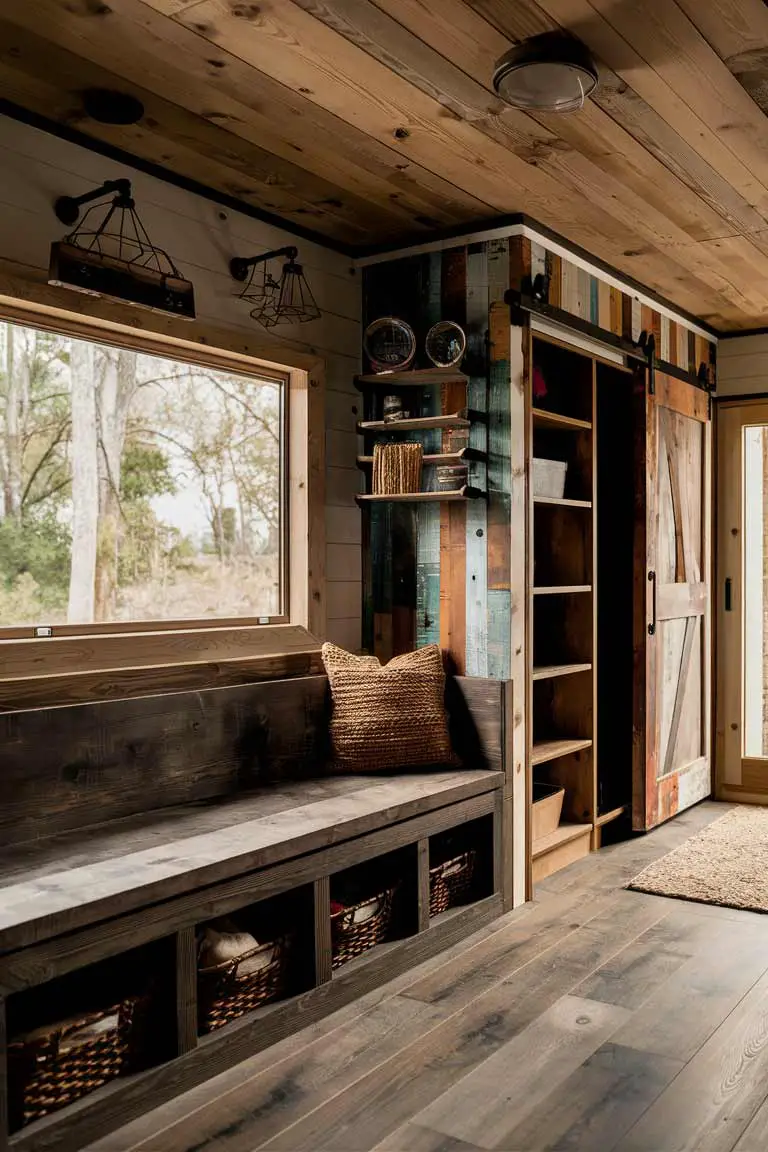
Consider benches with concealed storage compartments to tuck away seldom-used items.
Wall-mounted shelves free up floor space while providing ample storage.
Sliding barn doors on closets save room and enhance rustic aesthetics.
Furniture with Multiple Functions
Furniture that serves several purposes is invaluable in small spaces.
An ottoman with hidden storage can act as seating, a footrest, and a place to keep blankets or books.
Foldable or extendable tables offer flexibility for dining or work.
A vintage trunk can double as a coffee table and storage unit.

Maximizing Vertical Space
Vertical space is a goldmine in tiny homes.
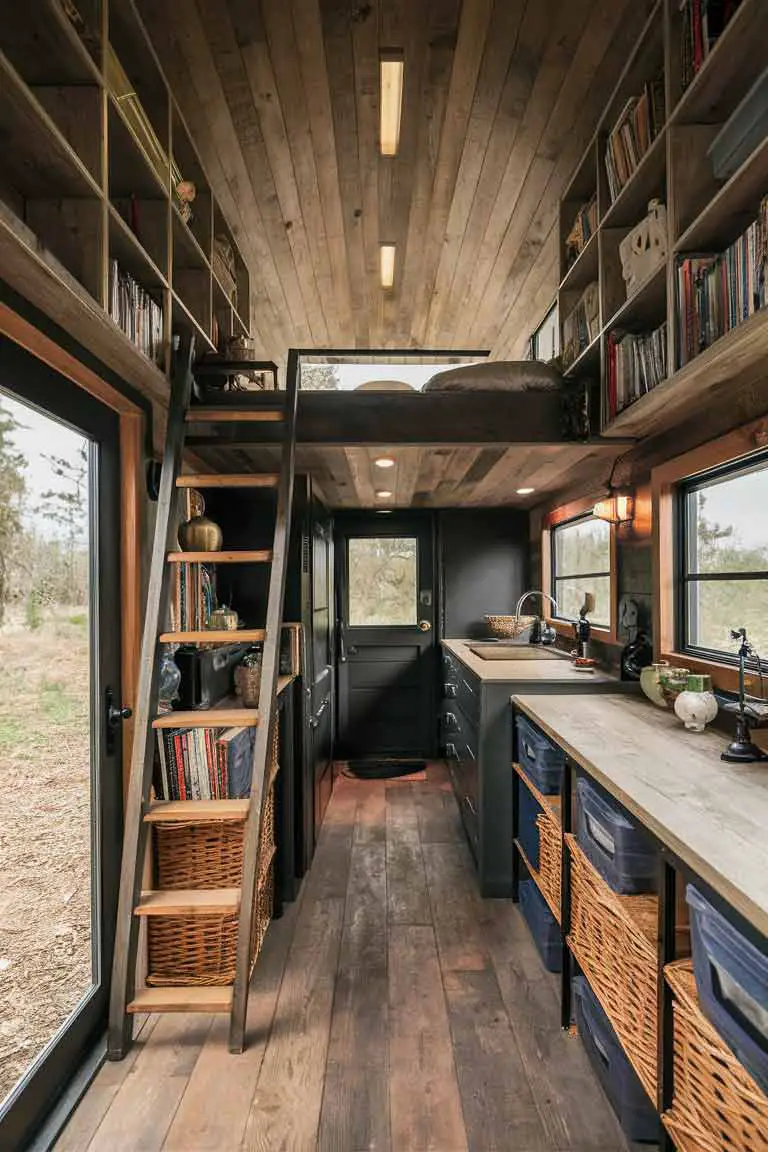
Lofted sleeping or storage areas significantly increase usable square footage.
A ladder crafted from reclaimed wood not only provides access but also adds rustic charm.
Floor-to-ceiling shelving can accommodate books, decor, and kitchen essentials efficiently.
Adding Warmth Through Decor and Details
Textile Choices for Comfort
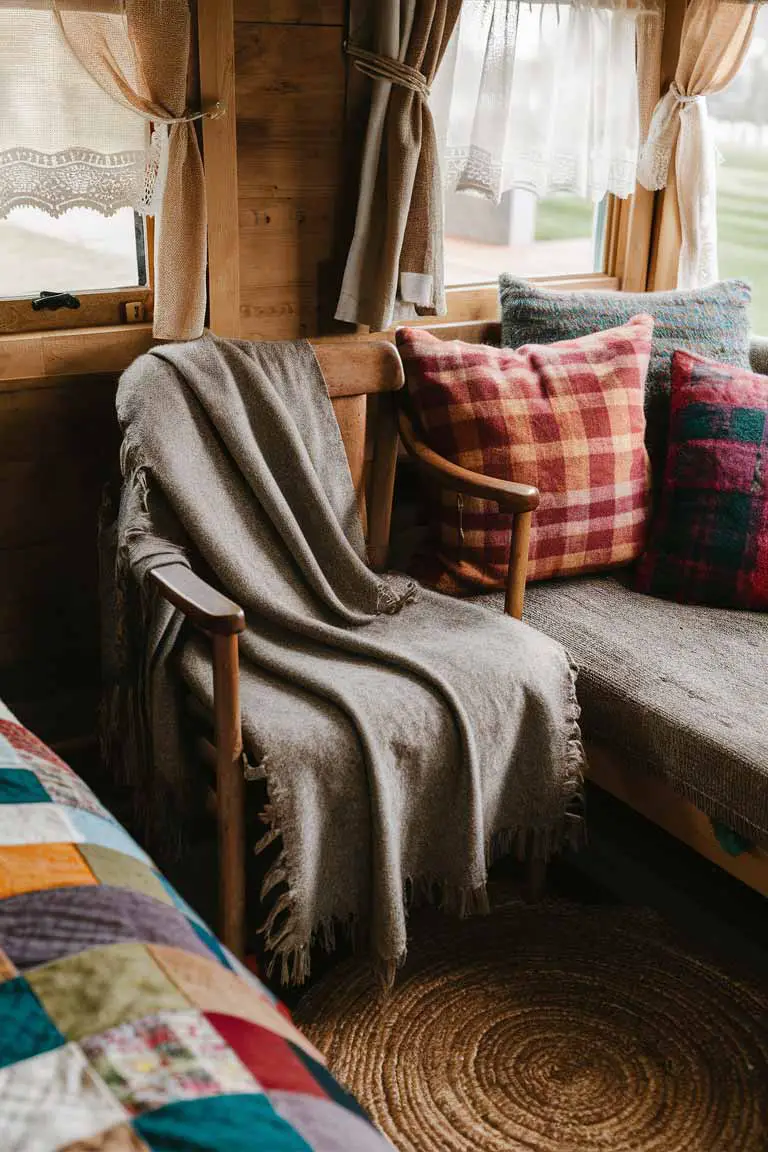
Textiles are key to making a rustic tiny house feel inviting.
Incorporate wool throws and flannel pillows to add softness and texture.
Area rugs, whether handwoven or vintage, help define spaces within an open floor plan.
Window treatments like burlap curtains or lace valances enhance rustic charm, while a patchwork quilt completes the bedroom’s cozy vibe.
Lighting to Set the Mood
Lighting profoundly influences the atmosphere in a tiny home.
Choose warm, soft lights to amplify the cozy ambiance.
Mason jar pendant lights are a trendy, DIY-friendly option that adds rustic charm.
Vintage lanterns serve dual roles as lighting and decorative accents.
For a bold statement, an antler chandelier can become a captivating centerpiece.
Iron wall sconces provide both rustic style and practical task lighting.

Incorporating Nature Indoors
Integrating natural elements is fundamental to rustic design.
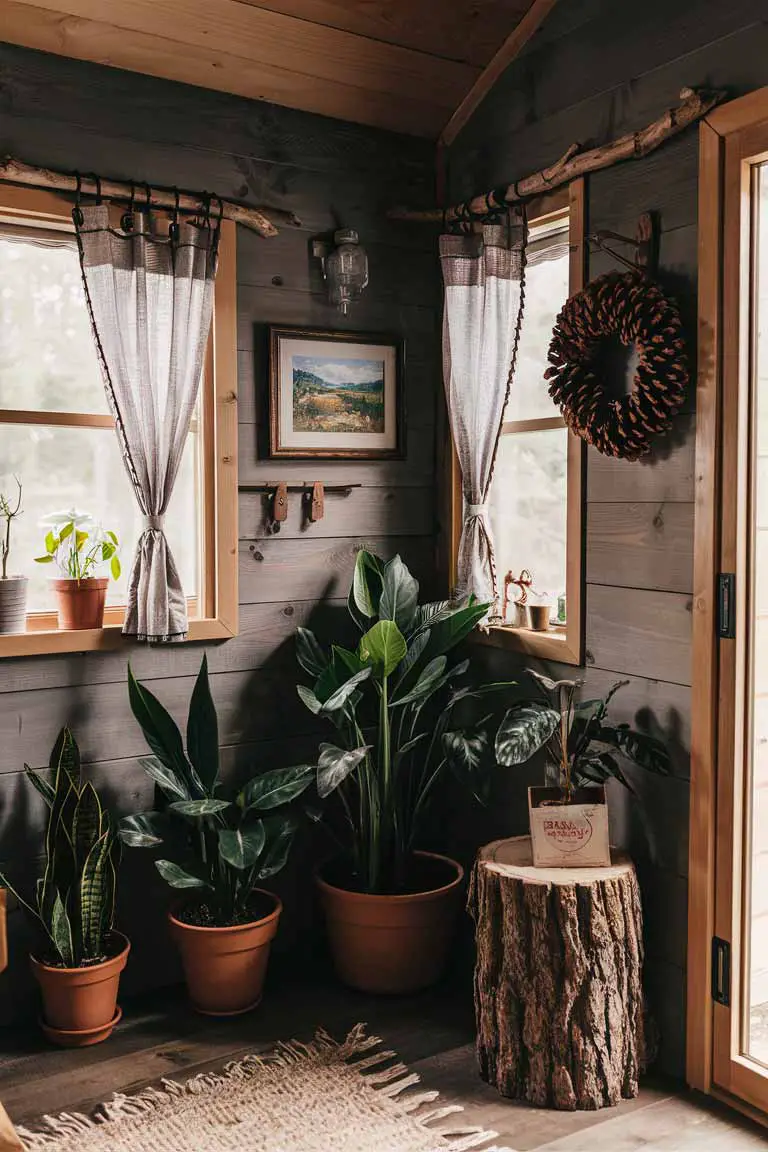
Indoor plants not only purify the air but also enliven the space with greenery.
Opt for easy-care plants suited to your lighting conditions.
Nature-themed artwork and unique touches like wooden branch curtain rods or pinecone wreaths reinforce the outdoor connection.
Tree stump side tables bring a literal piece of the forest inside.
Rustic Decorative Accents
Finishing touches breathe life into your rustic tiny home.
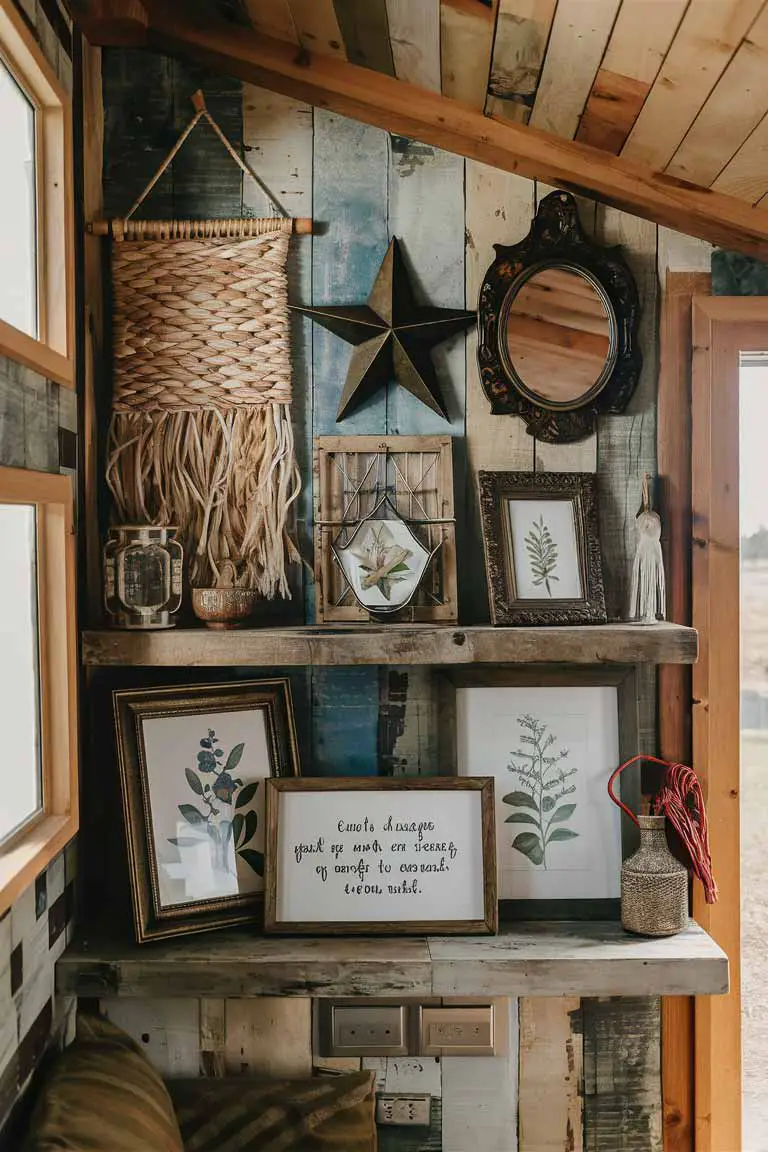
Woven wall hangings add texture and visual depth, while vintage metal stars or antique mirrors serve as striking focal points.
Botanical prints framed on walls bring an artistic nod to nature.
Wooden signs featuring inspirational quotes inject personality and warmth.
Distinct Rustic Styles to Inspire Your Tiny Home
Classic Farmhouse Charm
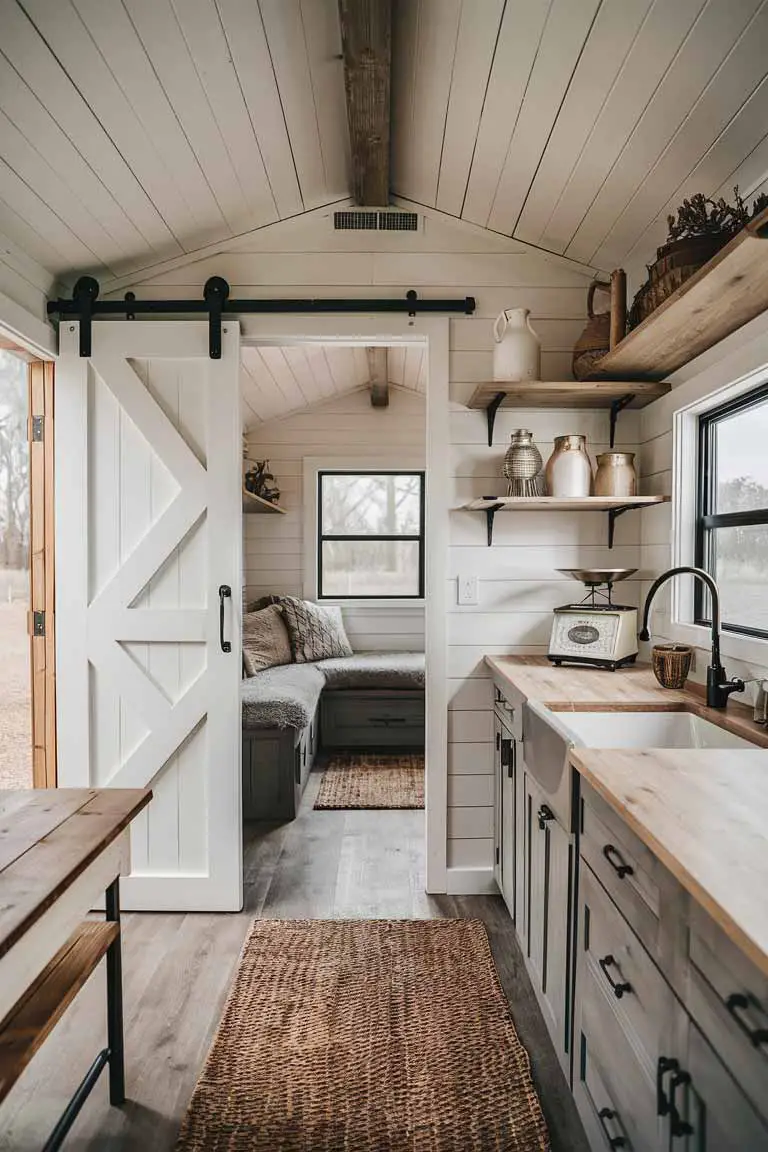
Farmhouse style blends simplicity with comfort, making it a favorite in rustic design.
Sliding barn doors save space and add character, while light wood accents and open shelving enhance the airy feel.
Incorporate vintage items like an old milk jug vase or antique kitchen scales to amplify authentic farmhouse vibes.
Mountain Cabin Ruggedness
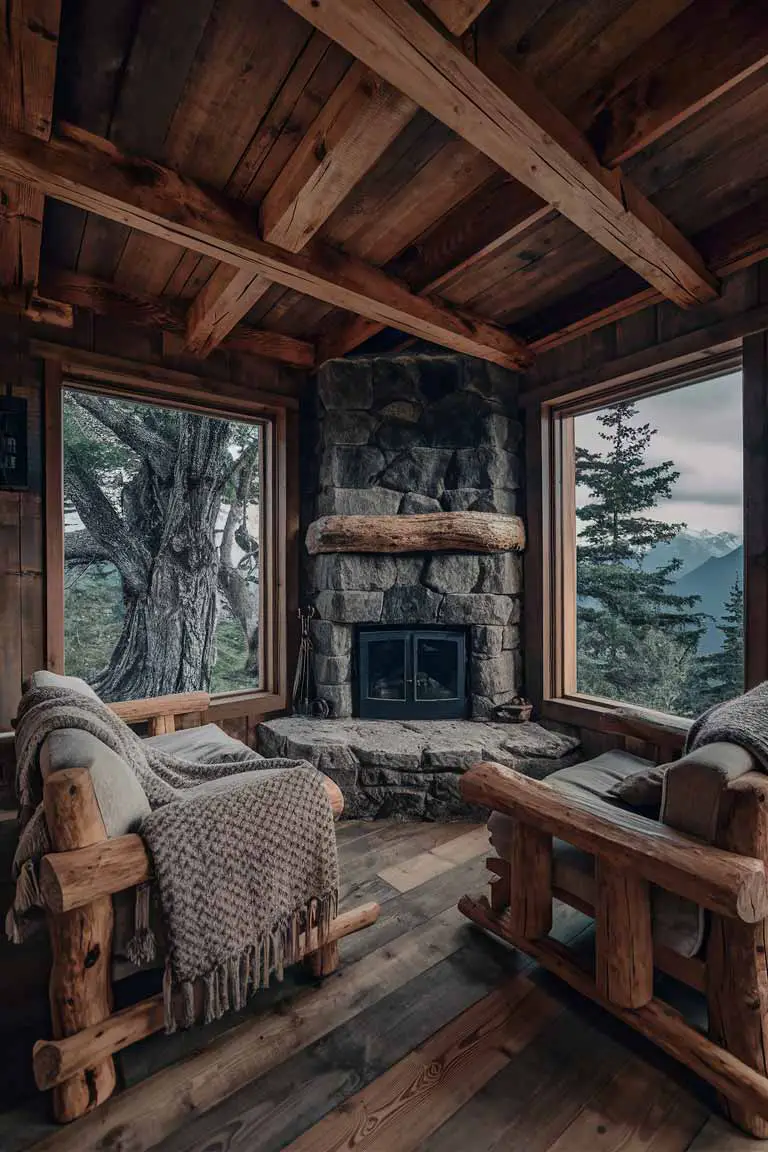
For a more robust rustic aesthetic, mountain cabin style is ideal.
Characterized by exposed heavy timber beams and a commanding stone fireplace, this style evokes a cozy wilderness retreat.
Large windows invite natural light and scenic views, making the space feel larger.
Layer thick wool blankets and choose sturdy wooden furniture in warm, earthy tones to complete the look.
Bohemian Rustic Eclecticism
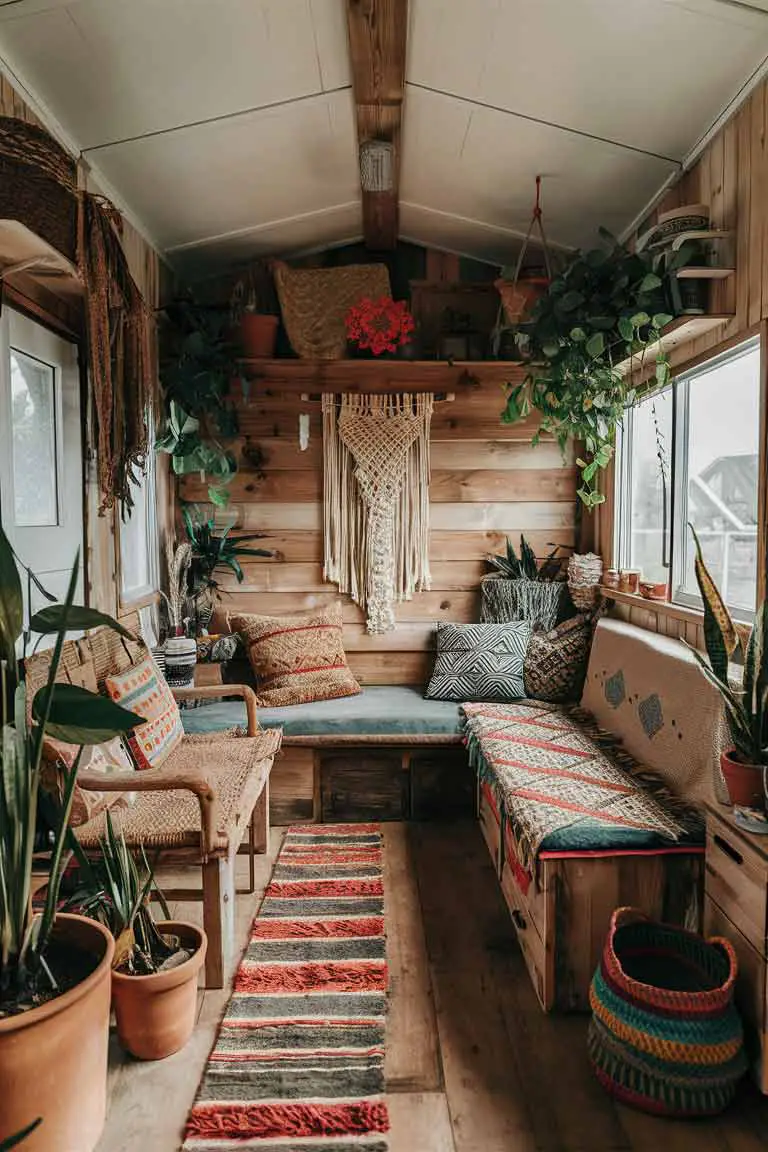
For those who prefer a playful twist, bohemian rustic combines natural rustic elements with vibrant, eclectic boho flair.
Think colorful textiles layered over rustic wood furniture, an abundance of greenery, and handcrafted decor like macramé wall hangings or woven baskets.
This style balances a rustic foundation with lively, artistic accents for a unique personality.
Extending Rustic Living Outdoors
Wooden Rustic Decks
Outdoor spaces are vital extensions of tiny homes.
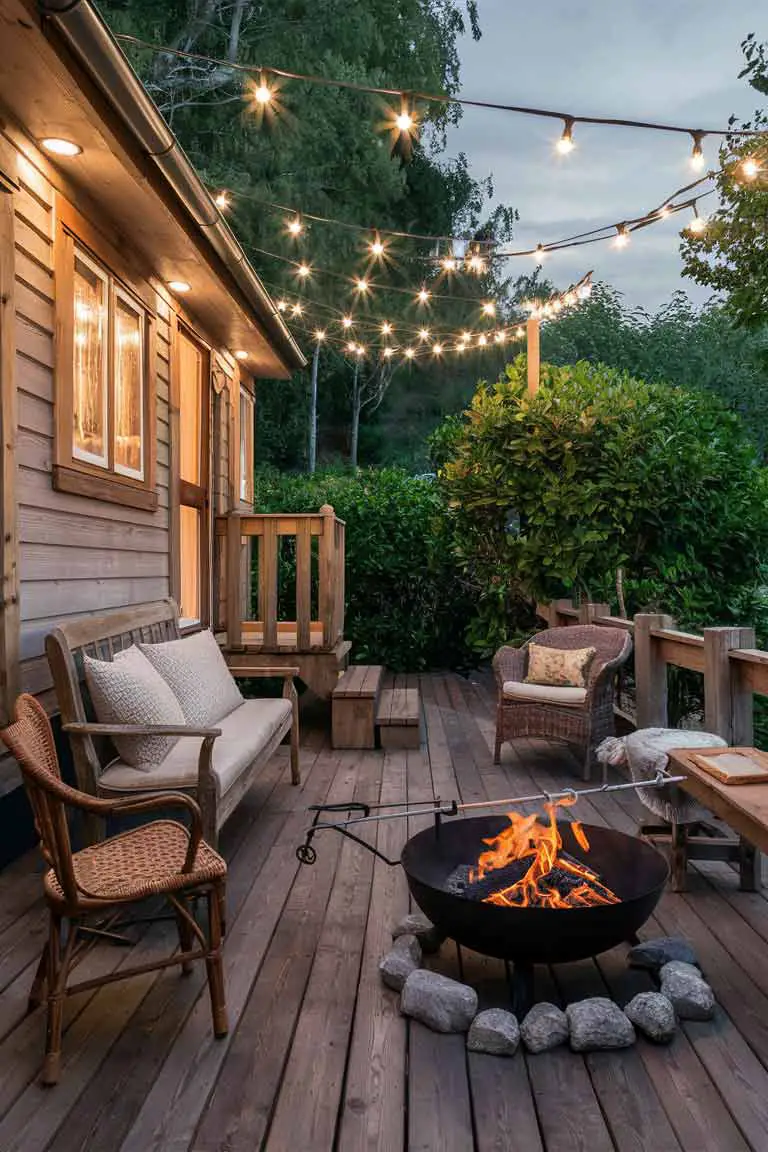
A wooden deck continues the rustic theme beyond the walls.
Rustic outdoor furniture like benches or Adirondack chairs provide comfortable seating.
A fire pit creates a cozy gathering spot for cool evenings, while string lights overhead add a magical glow.
Welcoming Entryways
First impressions count, even in small homes.
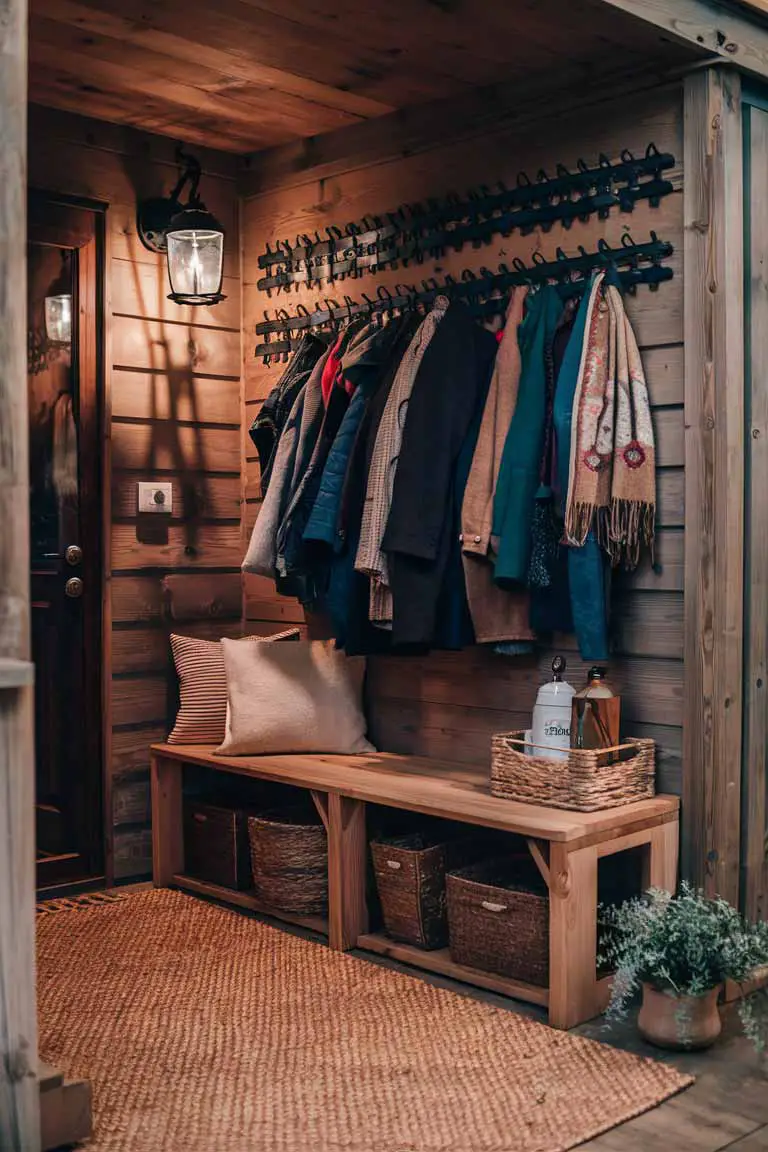
Create a warm entry with a wooden bench for removing shoes and a coat rack made from repurposed railroad spikes for rustic flair.
A woven rug adds texture and warmth underfoot, while a vintage lantern provides inviting illumination.
Adding a small potted plant brings life and color to the entrance.
Final Thoughts: Crafting Your Rustic Tiny Home Sanctuary
Designing a rustic tiny house is a delicate dance between maximizing utility and infusing charm.
By thoughtfully integrating natural materials, innovative storage, and curated decor, you can create a space that feels both intimate and spacious.
Intentionality is key-each piece should serve a purpose, whether functional, aesthetic, or ideally both.
With creativity and planning, your rustic tiny home can become a welcoming refuge that proves less truly can be more.
Whether you gravitate toward the simplicity of farmhouse style, the ruggedness of mountain cabin design, or the vibrant spirit of bohemian rustic, there’s a perfect rustic tiny house aesthetic waiting for you.
Embrace the tiny living movement and start building your own rustic haven today.
